- Free delivery from €70
- Producer-harvester in southern Vendée
- Secure payment
- 06 04 47 22 08

The hive journal · Bees
The incredible journey of bees: the distances they travel for our ecosystem
How far does a bee fly? How does it find its way back to the hive? Follow our foragers from flower to flower.
Bees are fascinating creatures that play an essential role in preserving our ecosystem. They pollinate plants and produce honey, wax and other treasures of the hive. To carry out these tasks, they cover astonishing distances every day. Let’s explore the incredible journey of our foragers, from the hive to the flowers.
Bees and pollination
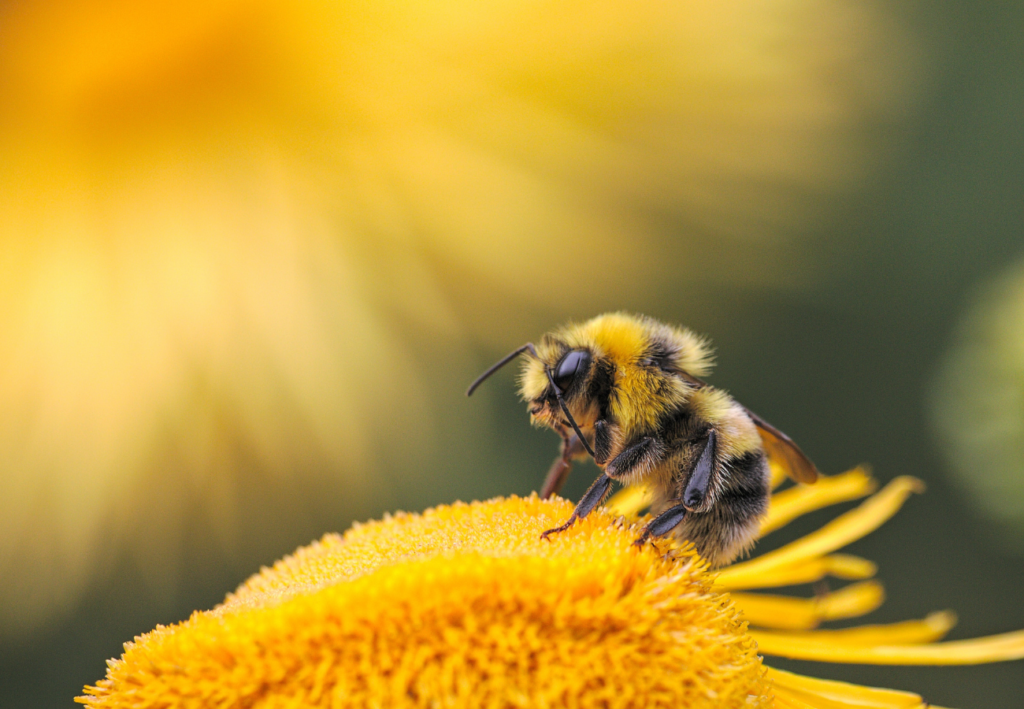
Bees are outstanding pollinators. By flying from flower to flower, they carry pollen from one plant to another and help plants reproduce. Thanks to them, we enjoy many fruits, vegetables and seeds.
How far can a bee fly?
Foragers, the workers who make up most of the colony, leave the hive to collect nectar, pollen and water. A forager generally flies up to 5 kilometres to find food, and some go as far as 10 kilometres or more when flowers are scarce. Every trip is an effort: the bee then has to fly back to the hive with its precious load.


How do bees find their way?
To find their way, bees use the position of the sun, visual landmarks, scents and even the Earth’s magnetic field. Back at the hive, they show their sisters where the best flowers are with a dance: the famous waggle dance.
Do bees migrate?
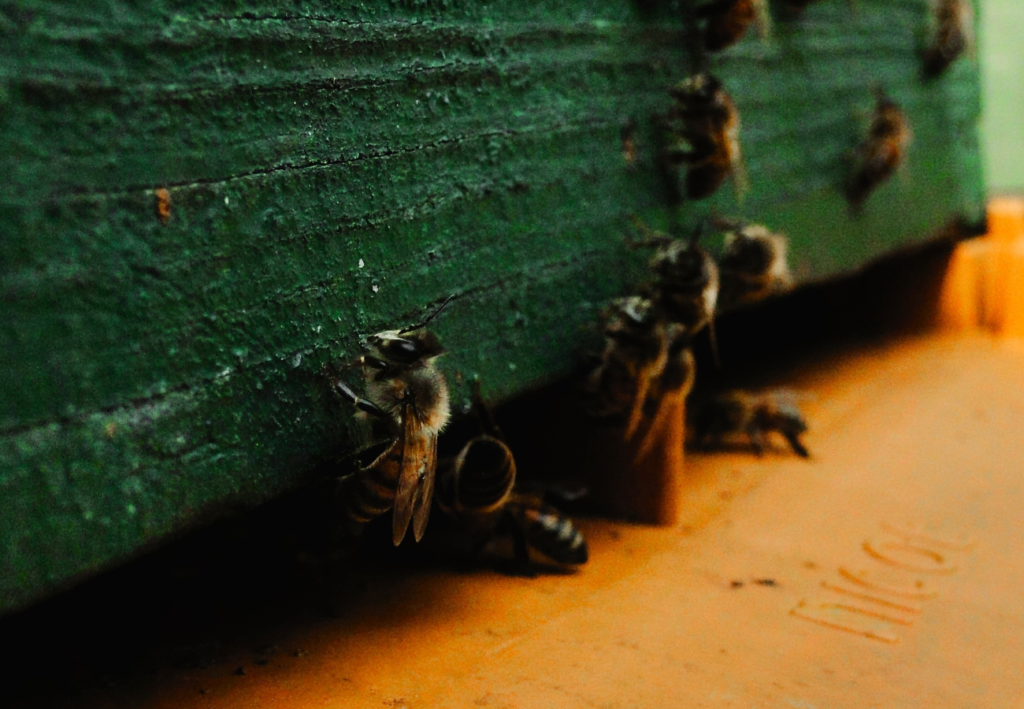
Unlike some butterflies, the honey bee (Apis mellifera) does not migrate: a colony stays attached to its hive. Beekeepers sometimes move hives to follow the flowering seasons – this is called transhumance. At Le Chemin du Miel, our hives are spread across around ten apiaries in southern Vendée, in groves, meadows and gardens, to keep the colonies stable.
Journeys full of obstacles
Buildings, crops treated with pesticides, the disappearance of hedgerows and flowering meadows: obstacles are multiplying along the bees’ routes. The loss of biodiversity makes their journeys even harder.
Let’s protect our foragers
Bees are true adventurers. Their journeys from flower to flower are essential to pollination and to our food. Planting bee-friendly flowers, limiting pesticides in the garden, supporting local beekeepers: everyone can do their bit to protect these precious workers and our ecosystem.
The hive journal
Read also

A question about our honeys?
Vincent and his family will be happy to help, by phone, by email or through the contact form.
Free delivery from €70
€11 flat rate below that, anywhere in France
Secure payment
Bank card or cheque
Producer-harvester
From hive to jar, as a family
Any questions?
06 04 47 22 08